
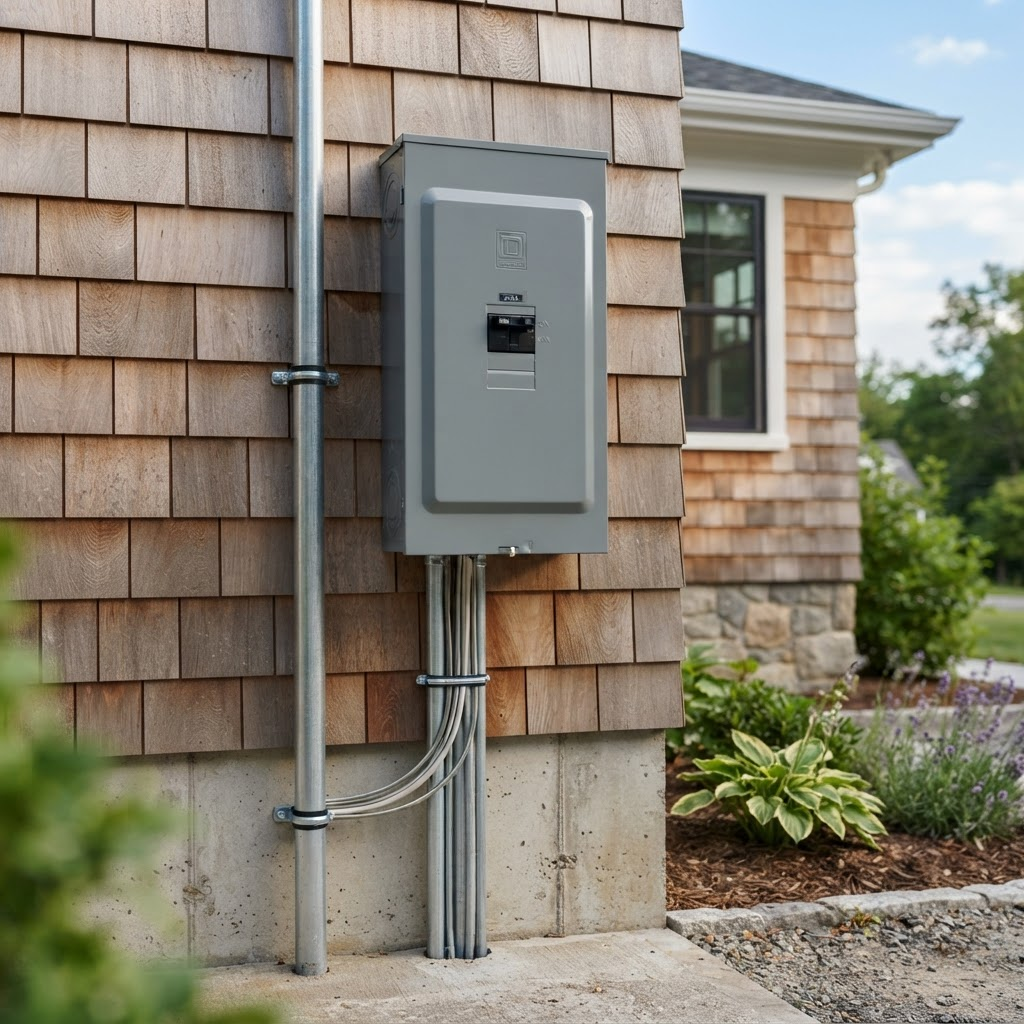
Is Your Electrical Panel Ready for Today’s Home?
EV charging, heat pumps, solar and batteries all add electrical demand. We’ll help you understand if a panel upgrade makes sense.
What's Included
- Site evaluation and load calculation
- Utility coordination and permitting
- 100A vs 200A explained plainly
- Support for EV, solar and battery additions
- Inspection and utility completion
Signs It May Be Time to Evaluate Your Panel
Frequently tripped breakers
Flickering or dimming lights
Limited or no open breaker space
An older panel or electrical equipment
Adding an EV charger, solar or battery
A major remodel or addition
100 Amp vs. 200 Amp Service
Amperage describes how much electrical capacity your panel can safely deliver at once. Many older California homes were built with 100A service.
100 Amp Service
Common in older homes. May be sufficient for basic household needs, but can leave limited room for EV charging, solar, battery storage or heavy appliance loads.
200 Amp Service
Substantially more available capacity — commonly used to support EV charging, solar, battery storage, electrification and larger remodels alongside everyday household use.
The Panel Upgrade Process
Site Evaluation
Load Calculation
Utility Coordination
Permitting
Installation
Inspection
Curious About Current Incentives?
Depending on your utility and project, incentives related to electrification and panel capacity may be available.
Often Paired With This Service
EV Charger Installation
Tesla Wall Connector, Tesla Universal Wall Connector and Level 2 charging for other EVs — installed safely and up to code.
Electrical Services
Main panel upgrades, subpanels, dedicated circuits, troubleshooting, wiring, lighting and EV/solar-ready infrastructure.
Solar & Battery
Rooftop solar, battery storage, energy independence and backup power — new systems, additions and upgrades to existing solar.
Frequently Asked Questions
Ready for a Panel Upgrade Evaluation?
Tell us about your home and project — we'll take it from there.